Shopping the Farmers Market: Why Blog

After years of frequenting the farmers markets in NYC, but only buying a few supplemental ingredients here or there, I decided to be experimental and work dishes around what is in season or looks particularly mouthwatering at the market that day. Green seems to be the buzz word these days from NYC to the White House, and the eat local movement is in full swing. My attempt here is to buy as many ingredients as possible from a the farmers market, and then occasionally supplement with locally produced ingredients from chain markets around the city. Most of the recipes I post (except for the baking recipes) are either things I created myself, or variations on recipes I've found elsewhere. I hope that you take the recipes and shopping tips here and they inspire you to do your own local cooking.

Thursday, August 19, 2010

Peach and Honey Crostini

I've been working all week on a BBQ show for the Food Network, so today I wanted to shy away from heavy proteins. I thought I'd branch out and try a new farmers market in Manhattan. There are only three on Thursday in the borough, and two are south of Chambers street, so I thought I'd head to the one in Battery Park. Tucked away in a cul de sac right off of the Hudson river, the Battery Park farmers market is small, but quaint. It only had three small vegetable vendors, a cheese vendor, a bread vendor, and a flower shop, but I loved the fact that there was a table solely devoted to lavender.


I know I talked about how I liked edible flowers in a post a couple of weeks ago, but I wasn't about to try to integrate dried lavender into my dish today, so instead, I purchased a jar of lavender honey. As the summer winds down, I thought that I would take advantage of all the great peaches while I could. There were both white and yellow as well as donut peaches and apricots, but I decided to with the yellow for $2.50/lb. At this point, I wasn't sure what I wanted to do, so I also purchased a cato randsom blue cheese from the cheese vendor, hoping something would come to me.

All of a sudden I saw some crusty bread in the corner and decided to grill the peaches, and make a sweet and savory crostini.

Today I purchased:

At the Farmers Market
2 yellow peaches
1 jar of lavender honey
french bread
Blue cheese

At a Specialty Market
Prosciutto

Ingredients I had at Home
Basil (from last farmers market)
Coarse sea salt
Olive Oil
Aged balsamic vinegar

Recipe: Grilled Peach Crostini with Lavender Honey and Sea Salt

Ingredients

1 peach, cut in quarters and de-pitted
2 strips of prosciutto
8 slices of crusty french bread
Lavender honey
3-4 basil leaves
Crumbled blue cheese
Olive Oil
Coarse sea salt to taste
Balsamic vinegar

You can make this recipe on the grill outside, but I don't have any outside space, so I made it on my grill pan. First, slice the french bread into 1/4 - 1/2 inch pieces. Brush with olive oil. Cut the peaches in half and remove the pits. Then slice into quarters. Grease the grill or grill pan with olive oil and heat to medium-high. Once the pan is hot, grill the bread for a couple of minutes on each side until grill marks appear, and they are toasted, but not burnt. Drizzle the honey over the cut part of the peaches, and place the peaches on the grill cut side down. Grill for about two minutes, and then flip. Grill for another two minutes, then remove peaches and put on a plate.


Now it's just as easy as assembling the crostini. I cut each peach quarter into two or three pieces, depending on the size of the peach. Place two pieces of the peach on the grilled french bread. Drizzle a little bit of honey on top of the peach. Take the sea salt and sprinkle a little over the peaches as well. I couldn't make up my mind what I wanted to do to finish the crostini, so I decided to finish them in two different ways.

Way 1: Prosciutto and basil
I took a basil leaf and tore it into small pieces. You could also cut it chiffonade style like I did with the pasta post earlier in the week. Next I took a strip of the prosciutto, tore a couple little pieces off, and put that on top as well. I finished with a drizzle of aged balsamic vinegar.


Way 2: Blue Cheese
I cut off a chunk of the blue cheese and crumbled it into little pieces. Then I took 3 or 4 pieces and placed them on top of the peaches. I finished this one as well with a drizzle of aged balsamic vinegar.


I personally preferred the Prosciutto and basil crostini. The saltiness was perfect with the sweetness of the peach, but didn't overpower the delicate flavor of the fruit. Grilled fruit is one of my favorite things to do in the summer. Depending on what you pair it with, the fruit can easily be used in a savory main course, or as part of a dessert. Next time, try serving the grilled peaches with vanilla ice cream, fresh raspberry sauce and a little mint. I think that's what I'll do with my leftovers.

Friday, August 13, 2010

Heirloom Tomato Pasta

As we hit mid-August, I realized that I have yet to do a proper pasta dish. I had made one last week at my parents' place in Massachusetts, but my hard drive crashing kept me from taking pictures while cooking. Now that I have my computer back with a brand new hard drive, I thought I'd do pasta proud. I'd been thinking about the dish I made at my parents' place all week, and how I never really got to enjoy it, so I thought I'd make it again now that I'm back in NYC.

Today I thought I'd stick close to home and go to the Grand Army Plaza market. I perused the selection on my way home from my morning run in Prospect Park. There was a great bread vendor with beautiful looking french loaves, and another selling pickles that I hadn't noticed before. But since I planned to make the pasta, I was most interested in the tomato selection.

.

Truth be told, the tomato variety looked a little scarce compared to the tomatoes at the farm last week, but I'm in the middle of New York City, not on a farm in rural Massachusetts, so I really shouldn't complain. I searched for San Marzano plum tomatoes to use in my pasta sauce. I only found a bucket that declared themselves "Italian plum tomatoes" which I could only imagine were San Marzanos, so I went with those. They did not have the deep red color of last week's tomatoes, but still looked good so I bought a half dozen at $2.00/lb. You can see the difference in the tomatoes below. The ones on the left are the tomatoes that I purchased at the farmers market today, and the tomatoes on the right are the San Marzanos that I bought last week at the farm in Massachusetts. They had a wonderful sweet and earthy flavor that couldn't be beat.


I like to make this dish with a variety of vegetables depending on what's in season. I've been making some variation of this quick tomato based pasta since college, and often use just the tomato sauce, minus the veggies, as a base for other dishes like lasagna and eggplant parm. It tastes like you've been stewing the sauce for hours, but in a quarter of the time. Today I decided to go with a zucchini and a light purple eggplant. Both were only $1.00/pound. I'd just like to point out here that I went into Dean and Deluca later in the day and saw the same eggplants listed at $4.00/pound. If you hadn't seen the reason before for shopping at the farmers market instead of a traditional market, this should provide you with one.

I also grabbed a bunch of fresh basil for $2.50/bunch before heading back to my apartment. It wasn't the cheapest bunch there, but it looked better than some of the others. Basil can easily wilt if it sits out too long. I picked a bunch with nice crisp leaves, and was on my way.

Today I purchased:

At the Farmers Market:
6 "Italian plum tomatoes"
1 zucchini
1 light purple eggplant
1 bunch of basil

At a Supermarket:
1 box of Barilla Rotini
1 ball of locally made buffalo mozzarella (unfortunately no mozzarella at the farmers market)

Supplementary Ingredients I Already Had:
Garlic
Shallots (my friend had given me a few of these from her trip to the farmers market in McCarren Park earlier in the week)
Red cooking wine
Grated Parmesan
Salt
Pepper
Dried basil
Sugar
Olive oil

Recipe: Summer Vegetable Pasta with Quick Tomato Sauce

Ingredients:
6 plum tomatoes sliced and slices halved
1 zucchini sliced 1/4 inch thick, and slices halved
1 eggplant sliced 1/4 inch thick, and slices quartered
15 large basil leaves
1 large shallot, minced
2 large cloves of garlic, minced
1 tsp of dried basil
2 Tbsps of red wine
2 thin slices of mozzarella
Salt, Pepper, and Sugar to taste
Grated Parmesan to taste
1/2 box of rotini pasta
1 Tbsp of olive oil

I always think it's a good idea to get all of your ingredients ready before you start to cook, that way you're not chopping frantically while your eggplant is burning.


Once everything is ready, turn the water for the pasta on, and add the olive oil to a large saute pan on medium heat. When the oil is hot saute the garlic and shallots for about a minute. Add zucchini and eggplant and continue to cook for about 3-5 minutes until the zucchini starts to lightly brown and the eggplant begins to soften and turn translucent.


Once this begins to happen add the tomatoes to the pan. Add a little salt and pepper and let continue to cook while stirring. Cook until the juices in the tomatoes begin to seep out, and the there is a bit of liquid in the pan. This took a bit longer for me this week than last because just as suspected, the tomatoes were not quite as juicy as the batch from last weekend. If this is taking more than a couple of minutes, cover the pan for a minute. Once the juices begin to release add the red wine to the pan. I just used a red cooking wine, but I suggest a Cabernet if you have it. I just did a turn around the pan, but I estimate that at about 2 tablespoons.


At this point there should be enough liquid in the pan that it seems saucy. Turn the heat down to medium-low. (You should probably add the pasta to the boiling water about now too.) This is where you build the flavor. If I was slow simmering a sauce over hours, I would add a bay leaf or two, but since this is a quick sauce, I just added some dried basil. You could use dried oregano as well. Next I added the sugar and salt. This is really to taste, so I don't have an exact amount of either, but I'd venture to say that I ended up adding 3-4 teaspoons of salt, and 2-3 tablespoons of sugar. I didn't add either ingredient all at once. I alternated, adding a little sugar, then a little salt until I got the flavor that I wanted. I would suggest starting with a teaspoon of salt and a tablespoon of sugar, then tasting it. Trust your instincts here, if it's too salty add a little bit more sugar, if too sweet, a little more salt. Just don't overwhelm it with either...go slowly.


Once you get the flavor you want, turn off the heat. You may notice in the pictures that I added shrimp to this dish. I had some that were about to spoil so I thought I'd add it to the dish, but I don't feel like they added anything, which is why I didn't include them in the recipe. If you did want to add shrimp, instead of turning off the heat I'd throw the shrimp in, cover the pan, and let it cook for a minute and a half before turning off the heat.

Once the pasta is done (cook until al dente) add it to the pan with the sauce. My saute pan was a bit small so I combined the sauce and the pasta in the larger pasta pot. Turn the heat on low and add the mozzarella to the pan. I had cut two thin slices off of the ball and then broken each slice up into little pieces before adding them. I seasoned with a bit more freshly ground pepper and then mixed the dish until the sauce and the pasta were well blended, and the mozzarella began to melt, about 30 seconds to a minute. Then I turned the heat off, and mixed in the basil.


As you can see in the photos, I cut the basil chiffonade style. This means that it was cut in long thin ribbons. To do this, I placed all of the leaves on top of each other, and then rolled them up into a tight roll. I then sliced the basil in thin strips.


To serve the pasta I topped it with some grated Parmesan and a few pieces of the basil. Despite the tomatoes being less juicy than last week, they still produced a really nice flavor. I love this dish, it's really very easy, and is a hearty, yet light summer meal.


Sunday, August 8, 2010

Heirloom Tomato Guide

I ended up going to visit my parents this weekend in Massachusetts. So although I couldn't make it to the regular farmers market, I did visit a farm stand in Concord, Ma. I actually mentioned this place in my blue cheese burger post while talking about heirloom tomatoes. It's called Verrill Farm (www.verrillfarm.com), and has been around since 1995, though the family had been running a dairy in the town since 1918.

I did cook tonight, but I had a large scale, un-food related disaster occur while making the dish. My computer decided to explode while I was backing it up, and erase most of my backup drive, so I may be out of the internet world for a week or two once I'm back in NYC. Luckily, I had already planned to do an heirloom tomato primer. There are so many different varieties of the late summer fruit that I thought I'd fill you in on what's what, when to take a big bite of one, and when to leave one for cooking. This isn't every heirloom tomato variety, just what was at the farm today.

Amana Orange: Large orange tomatoes originally from the Amana colonies in Iowa.


Arkansas Traveler:
Have a creamy, mild flavor. Originally from the Ozark Mountains.


Aussie:
Big, impressive beefsteak variety. Old fashioned, big tomato taste.


Big Beef: Hybrid that is good to grow in the home garden.


Big Rainbow: Large, bi-colored tomato.


Black Truffle: A Japanese pear shaped variety. Flavor is deep, chocolatey, smokey, and rich.


Brandy Boy: Hybrid of brandywine


Carbon: Among the darkest of the black tomatoes. Exceptionally rich and sweet flavor.


Dafel:
Small fruit, great flavor.


Delicious: A very large red beefstake that produces 1 - 2 lb meaty, solid fruits. Great on hamburgers.


Estivia:
Medium, globe shaped. Smooth and firm.


Fabulous: Ideal blend of sweet and tangy, and soft and firm.


Garden Peach:
Light yellow fruits that have a fuzzy texture and resemble mini-peaches.


Green Pineapple: Small beefsteak. Unique, fruity aroma that is released when you cut into the fruit. Slightly spicy


Green Zebra: Green with light green/yellow stripes. Very full bodied flavor, good in salads.


Health kick: This is a hybrid. It has 50% more lycopene than other varieties, an antioxidant that is supposed to help with cancer. Great in salads and cooking.


Jetstar: Superior, very pleasant taste. Firm, meaty fruits full of cracks. Not recommended for canning.


Legend: Introduced at Oregon State University. Nice blend of sugar and acid.


Mountain Fresh: I couldn't find much about this one.


Mountain Fresh Plus: Developed by NC State. Easily grown by a home gardener.


Mr. Stripy: Red and yellow striped fruit that is low in acid. Great raw!


Mule Team: Medium sized red fruits. Bright red, all purpose tomato


Orange Russian:
Bi-color Oxheart. Heart shaped with smooth golden flesh. Marbled inside with streaks of red. Sweet and fruity and flavor with few seeds.


Paul Robeson:
A great black, with great sweet, yet tangy flavor.


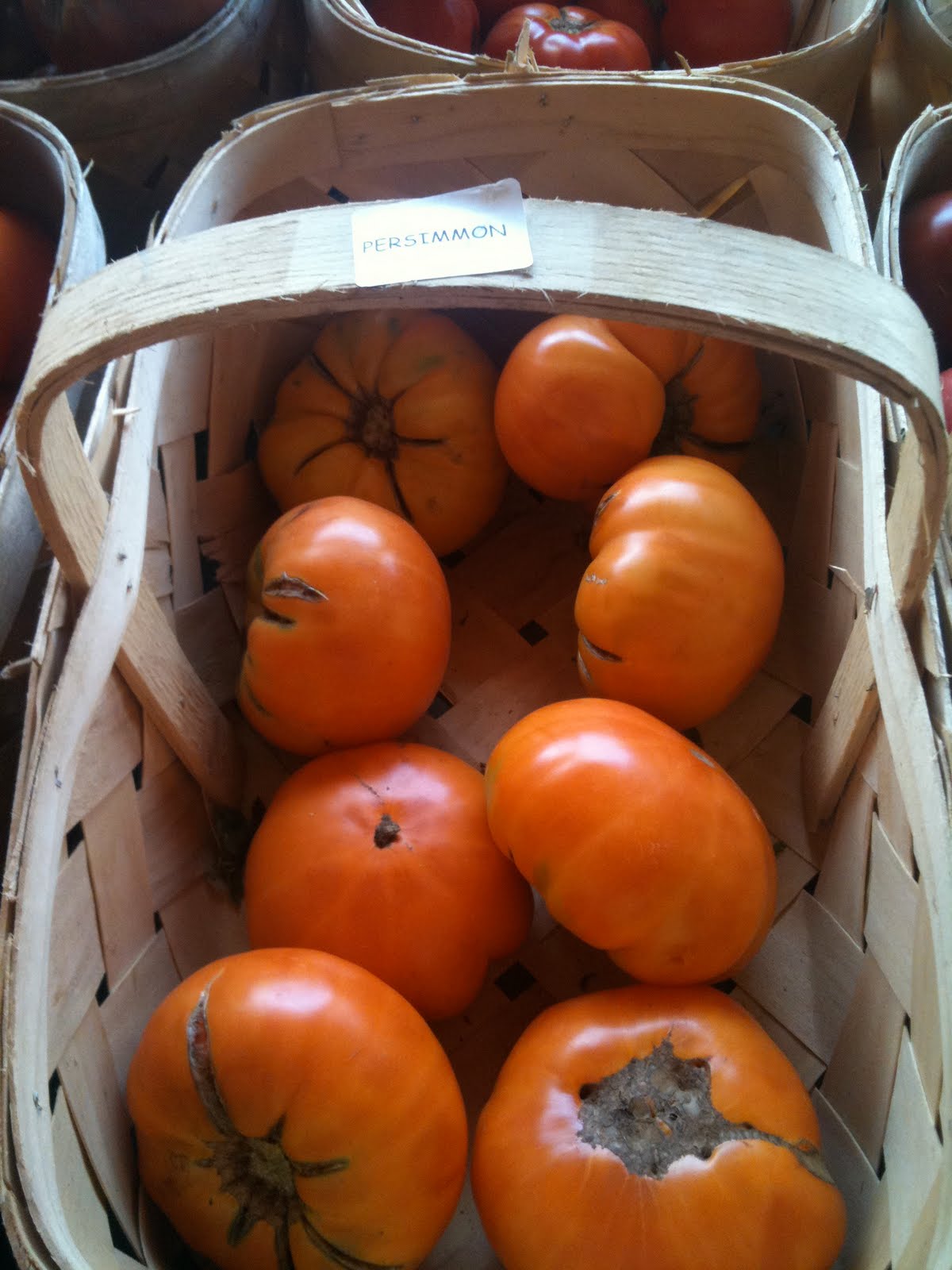
Persimmon: One of the best flavors of all the orange tomatoes. Meaty with few seed.


Red Brandywine: An Amish variety with great flavor


Rose: Smooth, round fruit with no blemishes. Thin skin and juicy, sweet flavor with a bit of zing.


San Marzano: A great paste tomato. Good crushed in a tomato sauce.


Striped German: Marbled interior looks beautiful sliced. Complex, fruity flavor and smooth texture.


Supersteak: Rich and full of flavor; improved beefsteak tomato. Superior disease resistance.


Ultrasweet:
Very sweet and flavorful.


White Queen:
Large, white, beefsteak tomatoes. One of the whitest of the lighter varieties. Smooth except for ribbed shoulders. Juicy and sweet with a well balanced flavor.